
Impact Wrench vs Impact Driver: Torque, Drive Size and Where Each Sells
The difference is not torque. It is the drive — a socket or a bit — and that interface decides which buyers you can sell to and which accessories ride along with the order.

They look the same in a catalogue photograph. They sound the same on a job site. They are not the same tool, and the difference is not torque — it is the drive. One takes a socket, the other takes a bit, and that single interface decides which buyers you can sell to, which accessories you can attach to the order, and which returns you will eventually handle.
If you are building a range for resale, this is the decision that shapes the first container more than voltage does.
An impact wrench wholesale decision starts at the anvil
An impact wrench ends in a square drive — 3/8in or 1/2in, occasionally 3/4in — and takes a socket. It is built to turn a threaded fastener that is already there: a wheel nut, a structural bolt, an anchor. It hits hard, in short rotational blows, and it does not care about bit retention because there is no bit.
An impact driver ends in a 1/4in hex quick-release holder and takes a bit. It is built to drive something into material: screws, self-tappers, decking, drywall, small bolts through an adapter. It hits faster and lighter, and its whole value is repeatable, controlled driving without cam-out.
Put a socket adapter in an impact driver and you can loosen a wheel nut. Do it for a living and you will break adapters, because the adapter is a small shank carrying a load it was not designed for. Job site workarounds are not a product strategy.
Torque: the numbers are not in the same league
Driver figures and wrench figures get compared in the same conversation and they should not be. A driver in the 100 to 250 N·m band is a serious professional tool. A compact wrench starts around 300 N·m and a high-torque wrench is expected to deliver 700 N·m and upwards.
That gap is not marketing. It follows from the fastener. An M8 bolt in timber needs a fraction of the torque a corroded M14 wheel nut needs, and asking one motor to cover both means compromising the tool that matters.
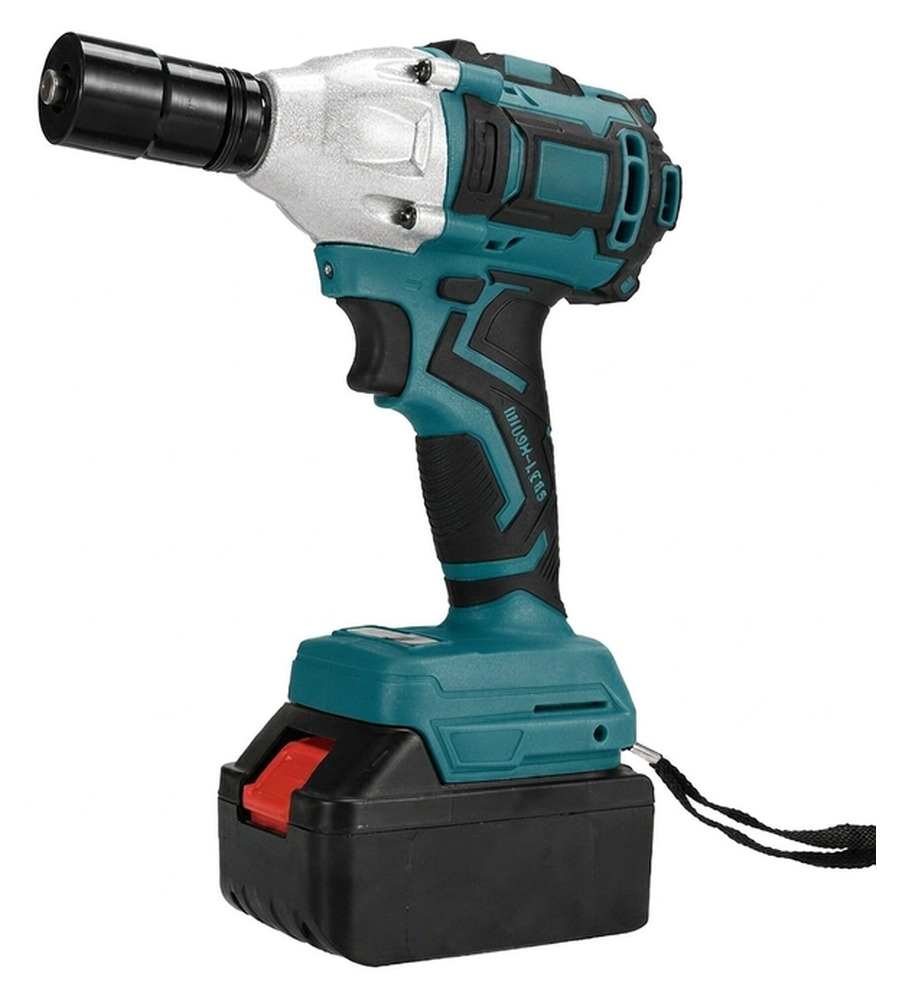
For reference, in our own catalogue the 21V brushless impact wrench is rated 550 N·m, the 18V model is rated 700 N·m max torque, and a 520 N·m 1/2in version sits below both. Three tools, three positions in a range, none of them interchangeable with a 1/4in hex driver.
Where each one actually sells
| Tool | Drive | Typical torque band | Fastener | Who buys it |
|---|---|---|---|---|
| Impact driver | 1/4in hex | 100–250 N·m | Screws, self-tappers, small bolts | Builders’ merchants, tool retail, contractors |
| Compact impact wrench | 3/8in or 1/2in square | 300–600 N·m | Car wheel nuts, M10–M14 | Automotive accessory, service trade |
| High-torque impact wrench | 1/2in square | 700 N·m and above | M16–M24, structural, plant | Industrial supply, heavy vehicle, rental |
Read that table as a merchandising plan rather than a specification. A distributor who stocks only drivers loses the automotive customer. A distributor who stocks only wrenches has nothing to sell to a framing crew. The two lines serve different aisles even when they hang on the same wall.
Sockets and bits are the margin
The tool is bought once. The interface is bought forever. A 1/2in square drive pulls a socket set, an extension bar, a universal joint and a torque-limiting bar into the order. A 1/4in hex holder pulls bit sets, a bit holder, a magnetic sleeve and a right-angle adapter.
This is the commercial reason to decide the drive deliberately: it determines which accessory catalogue you can attach to the tool, and accessories are where a distributor makes a repeatable margin on a low-friction sale. If you are assembling a first order, price the tool and the accessory kit together — a wrench sold without sockets is a return waiting to happen, because the customer cannot use it on the day it arrives.
What to put in a first order
A workable opening mix, for a distributor with no existing range:
- One 1/4in hex impact driver, mid torque, kit form with two packs and a charger.
- One compact 1/2in wrench in the 500 N·m class, bare tool or kit.
- One high-torque wrench only if you have an automotive or plant customer already identified.
- One socket set per wrench, sized to the market’s dominant fastener — metric in most of Europe and Asia, mixed in North America.
- One bit set per driver, impact-rated, not the standard bits from the hand-tool aisle.
Bare tool versus kit is a market decision, not a cost decision. Markets where the buyer already owns packs want bare tools; markets where the tool is the first purchase want kits. Get this wrong and the range sits on the shelf while the customer buys the version with the charger included.

Six lines to require on the spec sheet
Ask for these before comparing prices, because a wrench quoted without them cannot be compared at all.
- Drive size and anvil type: friction ring or detent pin, because they retain sockets differently.
- Max fastening torque, and the test method it was measured under.
- Impact rate in BPM, not just no-load rpm — the blows are what move the fastener.
- Breakaway torque if the supplier can state it, since removal is the harder job.
- Socket range the tool is intended for, in millimetres.
- Weight with the standard pack, and the pack capacity in Ah and Wh.
The same discipline applies across the range; if you want a worked example of how a spec sheet should read, see torque against no-load speed.
Where the driver and the drill overlap
Buyers routinely confuse the impact driver with the hammer drill, and both with the combi drill. The short version: a drill makes holes and can drive screws gently; a hammer drill adds percussion for masonry; an impact driver adds rotational impact for fastening only. If you are deciding what to stock across those three, which three to stock covers the overlap in more detail.
Questions we get most
Can one tool do both jobs?
No, and the adapters that claim to are a warranty claim in waiting. A 1/4in hex to 1/2in square adapter has a shank far smaller than the load path a wrench is designed for. It works for an occasional nut; it fails as a daily tool.
Is higher torque always better for resale?
No. Beyond the fastener’s requirement, extra torque buys weight, size and price, all of which reduce the number of customers who can use the tool comfortably. A 550 N·m class wrench covers most automotive work; the 700 N·m and above class is for plant, structural and heavy vehicle customers.
Bare tool or kit for a first order?
Kit, unless you know the buyer already has packs in the same voltage and interface. A kit removes the single most common post-sale complaint, which is that the tool cannot be used out of the box.
Next step
Our cordless range is organised so that drivers and wrenches are separate lines with their own accessory ecosystems, and every SKU is published with drive size, torque and carton data so the comparison is arithmetic rather than conversation. Tell us the market and the customer type you are targeting, and we will send a suggested opening mix with the socket and bit sets that go with it.