
Cordless Sander or Random Orbital: Which Finishing Tool Sells First
Sanding is the last ten per cent of the job and the easiest category to under-stock. Pad size, motion type and dust port decide which channel the tool can sell into.

Sanding is the part of the job nobody photographs: the last ten per cent of the work that decides whether the finish looks professional. That is also why it is the easiest tool category to under-stock, and the one where a wrong SKU sits on the shelf longest. A cordless sander wholesale range is not one product. It is a pad size, a motion type and a dust strategy, and the three have to match the market you sell into.
Three machines buyers call “a sander”
Orbital. A quarter-sheet or half-sheet rectangle with a pad that moves in small circles. It is the cheapest way to finish flat wood, it uses cut sheet paper, and it is what a carpentry customer expects to find. Good for door edges, panels, furniture. Limited on curves.
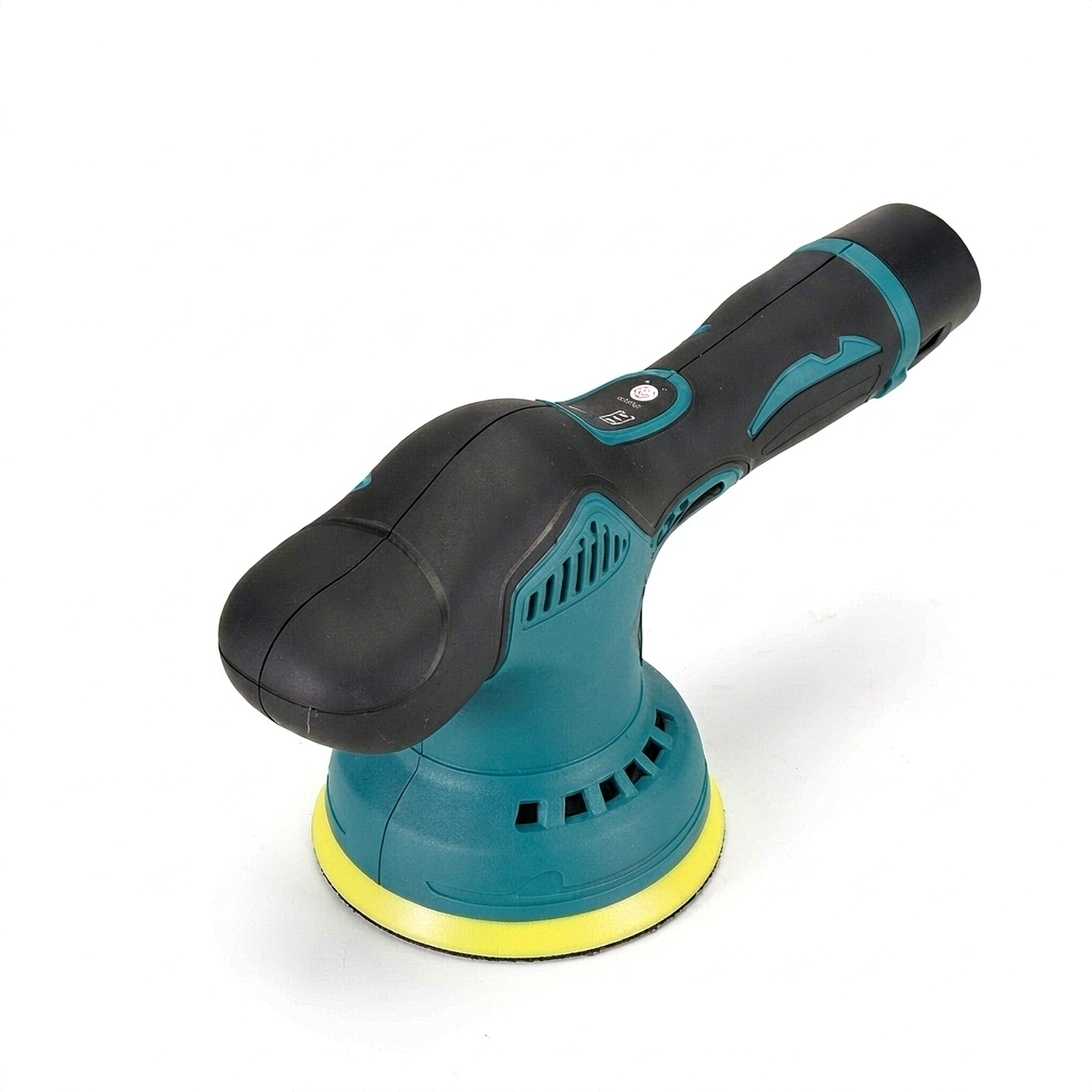
Random orbital. A round pad on a hook-and-loop backing, spinning and orbiting at once. It removes material faster, leaves fewer swirl marks, and it is the standard machine in automotive refinish and in any shop that finishes to a visible standard. Consumables are discs, which is a repeat sale.
Detail sander. A triangular or narrow pad for corners, profiles and between-spindle work. Small volume, high attachment, and the tool that completes a range without carrying the range.
One catalogue page that lists “sander” without saying which of the three it is will generate more questions than orders. The motion decides the application; the application decides the buyer.
Pad size is a consumable decision
Pad diameter looks like a minor specification. It is the row that decides whether your customer can buy paper locally, and paper availability is what makes a sander a repeat purchase rather than a one-off.
| Pad | Disc availability | Best application | Typical buyer |
|---|---|---|---|
| 125mm / 5in | Universal, every market | General finishing, small panels, furniture | Trade and retail, widest appeal |
| 150mm / 6in | Common in automotive supply | Faster stock removal, larger flat panels | Body shops, joinery |
| 180mm / 7in | Standard in auto refinish, thin elsewhere | Large flat panels, paint correction, polishing | Automotive refinish, detailing |
A 7in machine sold into a general hardware channel is a machine whose owner will struggle to find discs, and a machine without consumables is a machine that gets returned. The same 7in machine sold into an automotive refinish distributor is exactly right, because that channel already stocks the discs.
Two of the sanders in our own range are 7in orbital disc sanders with variable speed and hook-and-loop pad change, classified under HS 8467291000 and supplied from a 10-piece minimum. That specification is deliberate: it targets the refinish and detailing channel, not the general DIY shelf.
Why variable speed is not a gimmick here
Speed control on a sander is a material decision. Too fast on fresh paint burns through, too slow on bare timber glazes the surface instead of cutting it. A single-speed machine forces the operator to control the tool by pressure, which is how swirl marks and uneven finishes happen.
For resale, variable speed is also the feature that lets one SKU serve several applications, which reduces the number of models you have to carry to cover a channel. It is worth more in the specification than an extra 50 watts.
Dust: the specification that decides the reorder
A sander without dust extraction is a tool the customer uses once indoors and never again. The port diameter is the number that matters, because it decides whether the machine connects to the shop vacuum or the extractor the customer already owns.
Three positions exist in the market: no port, a small port with a dust bag, and a port sized to a standard hose. The middle one sells to hobbyists; the third sells to professionals who already own extraction. If your channel is trade, the port is not an accessory — it is the reason the tool is allowed on site at all.

Runtime claims: state the load, or do not state the number
Sanding is a continuous-load application, and continuous load is where runtime claims fall apart. A pack that runs a drill for an hour of intermittent work may sand for twenty minutes.
The responsible way to publish runtime is to state the pack, the material, the pressure and the grit used in the test. A number without those four is a number a customer will disprove in a week. If a supplier will not state the test, treat the runtime line as absent and quote pack capacity in Ah and Wh instead — those are measured facts, not marketing.
Stocking a finishing range
A range that covers a channel without carrying dead stock:
- One 125mm random orbital, variable speed, dust port, kit form.
- One 150mm random orbital for the automotive or joinery customer who asks for it.
- One quarter-sheet orbital for the carpentry side, sheet paper, low cost.
- One detail sander to complete the range, ordered in small quantity.
- Discs in three grits per pad size, ordered with the tools, not after.
The discs are the point. A sander sold without consumables creates a customer who buys paper from someone else, and that customer’s next tool purchase follows the paper.
Questions to ask a cordless sander supplier
- Pad diameter, orbit diameter in millimetres, and orbit rate in OPM.
- Dust port diameter, and whether a hose adapter is included.
- Pad attachment: hook and loop, and whether the pad is a replaceable part.
- Runtime test conditions, if runtime is claimed at all.
- Pad and backing plate availability as spare parts, and for how many years.
- Carton data per unit and per outer, for container planning.
That last one is not a formality — sanders are bulky for their weight, so a finishing range is usually volume-limited rather than weight-limited in a container. The carton data guide explains how that changes landed cost, and the supplier checklist covers the documents to collect before the first order. Spare pads and backing plates belong in the same conversation as the after-sales plan, because a sander’s wear part is the pad, not the motor.
Questions we get most
Random orbital or orbital for a first order?
Random orbital, in 125mm, unless your customers are specifically carpenters. It covers more applications, uses discs rather than cut sheets, and is the format most trade buyers already recognise.
Is a 7in sander too large for a general range?
For general hardware, yes. For automotive refinish and detailing, it is the standard. The pad size should follow the channel, not the other way round.
Do cordless sanders need a different charger specification?
They follow the same market rules as any cordless tool: voltage, plug and certification for the destination. The charger standards guide covers the 110V and 220V split and the marks that go with it.
Next step
Our finishing range is published with pad diameter, orbit rate, dust port and carton data on every SKU, so a channel decision can be made from the page. Tell us whether you are selling into trade, automotive refinish or general retail, and we will send the pad sizes and disc grits that fit that channel — with the spare pad part numbers attached.